
When Do You Need a Temporary Roof? (Construction & Renovation Guide)
A temporary roof scaffold is needed for full re-roofing projects, structural roof repairs, fire and flood restoration, heritage re-roofing, and any project where the roof covering must be removed for more than a few days in Irish weather conditions. In Ireland, rain is possible in any month, making a temporary roof strongly advisable for any project that strips the roof deck.
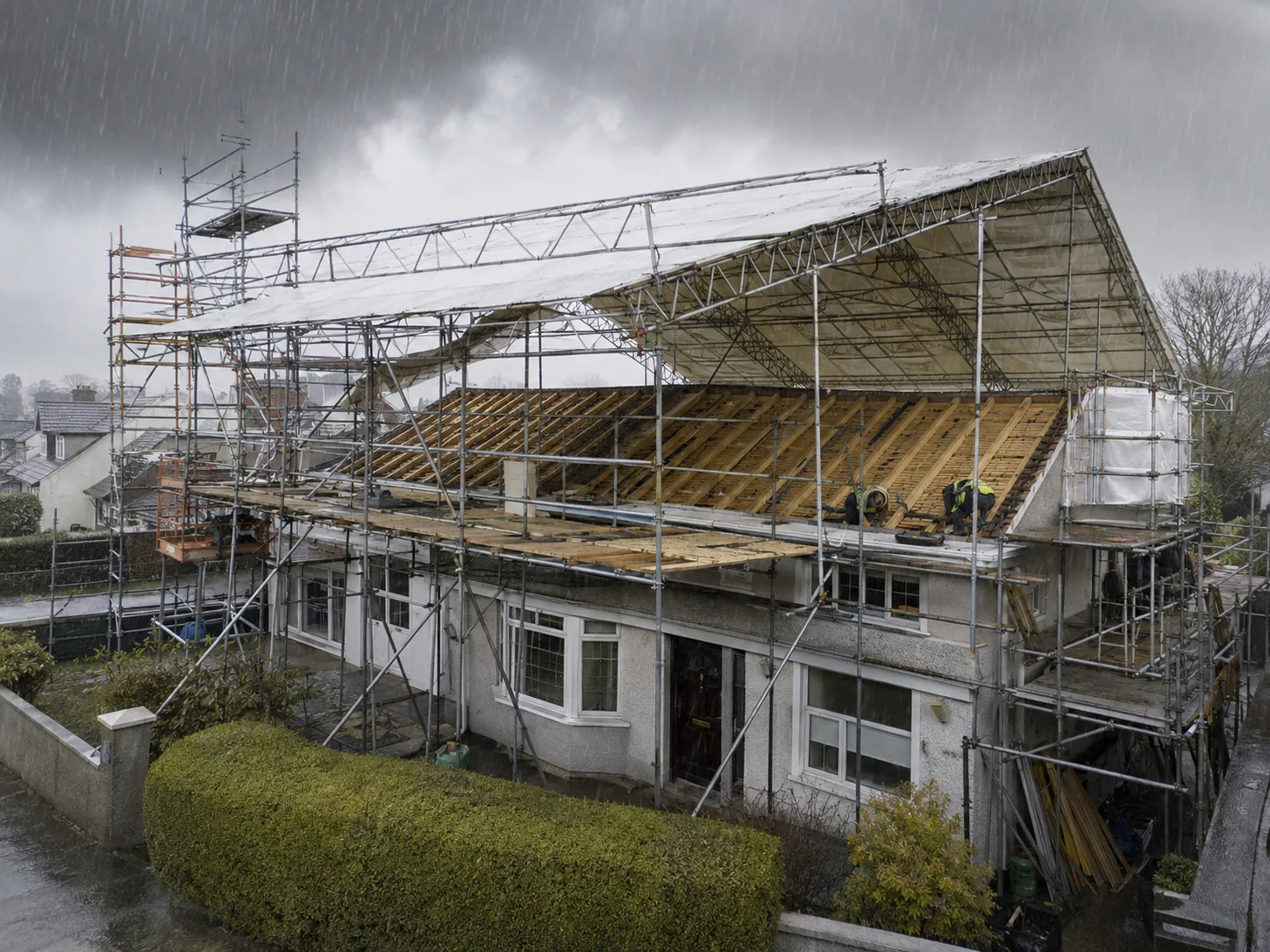
In construction and renovation, a temporary roof is a scaffold-supported structure that provides a weatherproof covering over a building or part of a building while works take place below. It is sometimes called a scaffold temporary roof, a weather protection scaffold, or a weather deck.
The decision to use a temporary roof is ultimately a risk assessment. The question is: what is the cost and disruption risk of the building being exposed to rain during the works, versus the cost of a temporary roof that removes that risk entirely? In Ireland - where prolonged dry spells cannot be relied upon and where an unexpected wet week can cause thousands of euros of secondary water damage - the case for a temporary roof is stronger than in drier climates.
This guide explains the specific project types and triggers that make a temporary roof necessary or strongly advisable, written by the engineering team at Ainscaff Scaffolding, CIRI-registered scaffold contractors with over 40 years of experience across Dublin, Cork, and Galway.
The Core Question: What Happens if It Rains?
The easiest way to decide whether you need a temporary roof is to answer this question: if it rains heavily for 3 days during my project, what damage occurs and what does it cost to put right?
| Project Type | Exposure if No Temp Roof | Temporary Roof Needed? |
|---|---|---|
| Full re-roof - all tiles/slates stripped | Roof deck and building interior fully exposed. 3 wet days = significant water damage to ceilings, walls, insulation. | Yes - strongly recommended or essential |
| Partial re-roof - section stripped at a time | Manageable exposure if phased carefully and dry conditions persist. High risk in autumn/winter. | Strongly recommended in Oct-Mar; advisable year-round |
| Structural roof repairs (rafters, purlins) | Structural works require removal of covering over a wide area for extended periods. | Yes - essential for any structural work spanning more than a few days |
| Chimney rebuild or major repointing | Minor exposure at chimney level. Not usually requiring full temp roof. | Not usually required - chimney flashing and tarpaulin often sufficient |
| Fire damage restoration | Fire-damaged roof must be removed entirely; secondary water damage is a major concern. | Yes - essential. Emergency deployment required. |
| Flood or storm damage | Damaged or displaced roof sections expose the building to further ingress. | Yes - emergency response. Claim may cover cost. |
| Heritage slate / clay tile re-roofing | Heritage materials are removed and relaid carefully; timescale is extended; building may be occupied. | Yes - strongly recommended; building may contain sensitive contents |
| Dormer window installation | Cutting into the roof slope exposes the building to weather while the dormer is constructed. | Advisable. Some contractors manage with careful sequencing; temp roof reduces risk significantly. |
| Full house external works only (no roof opened) | No roof exposure - works are below the existing roof. | Not required |
The Irish Weather Factor
The case for a temporary roof in Ireland is stronger than in most European countries for a simple reason: Ireland's rainfall is not seasonal in the same way as Continental Europe. Ireland does not have a dry summer period of 3-4 months during which roofing work can be planned with confidence. Rain is possible in any month, and autumn and winter bring extended wet periods.
| Location | Average Annual Rainfall (mm) | Wettest Month | Dry Month Probability |
|---|---|---|---|
| Dublin (east coast) | 730 mm | October / November | August statistically driest (50-60mm), but no month reliably dry |
| Cork (south) | 1,000-1,200 mm | December | July-August drier but 70-90mm still typical |
| Galway (west) | 1,100-1,400 mm | December / January | June drier but 70-80mm typical; extended dry periods uncommon |
These figures mean that even in Dublin - Ireland's driest major city - roofing works lasting more than 2 weeks face a significant probability of encountering at least one day of heavy rainfall that would cause measurable damage to an unprotected building. For projects on the west and south coasts, this probability is substantially higher.
When a Temporary Roof is Specifically Beneficial
Re-Roofing a Occupied Property
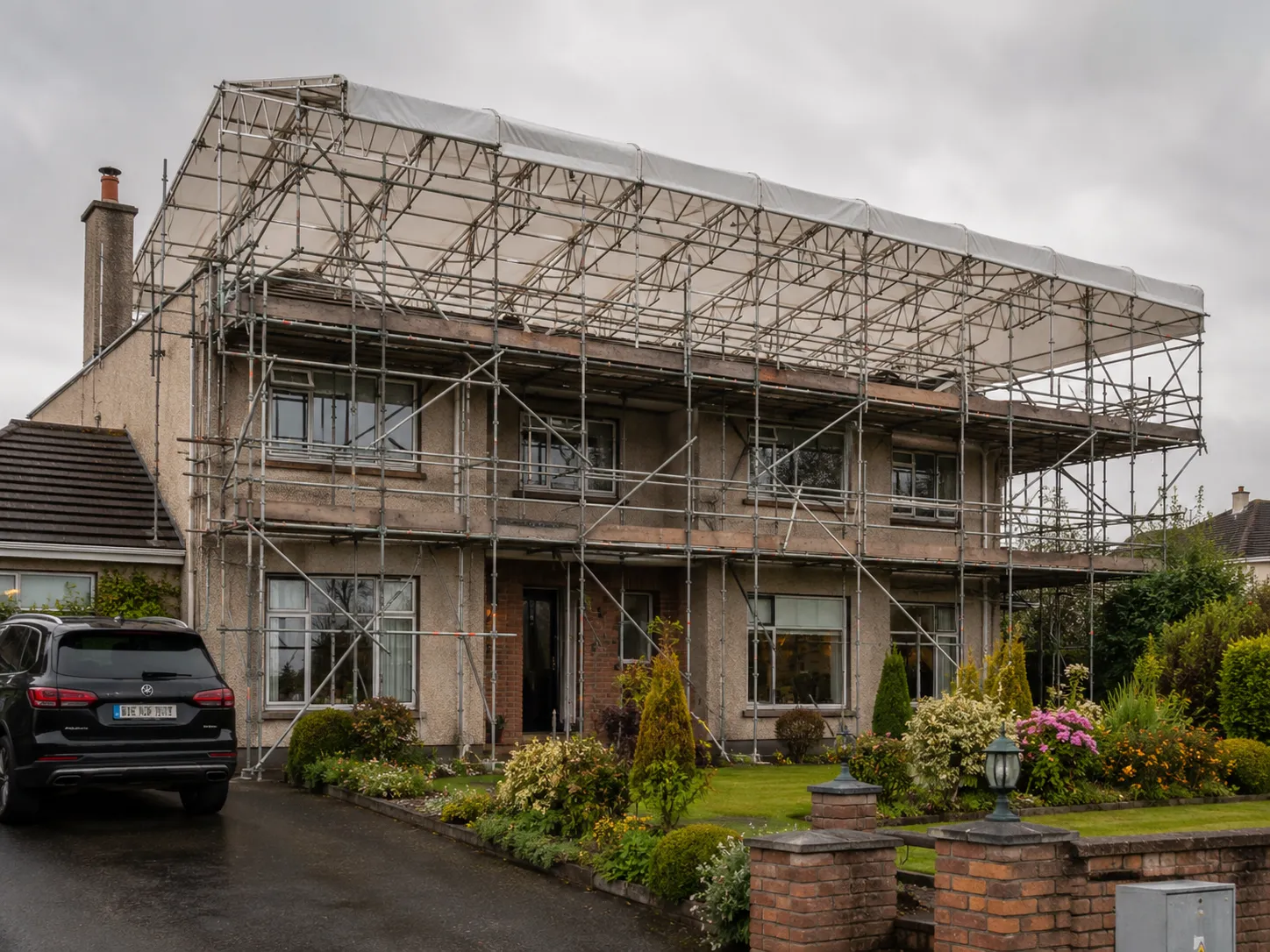
If the property will remain occupied during re-roofing works, a temporary roof is the responsible choice. It removes the risk of water entering the occupied space, protects the occupants' belongings, and avoids the disruption and cost of emergency water damage repair during the works.
Insurance Restoration
For properties that have suffered fire or flood damage, preventing secondary water damage is often the most time-critical action on the restoration programme. A temporary roof erected within 48-72 hours of the initial event can prevent water damage that would otherwise cost multiples of the temporary roof cost to repair. Insurance loss adjusters routinely recommend or require a temporary roof as the first action on fire-damaged properties.
Heritage Properties
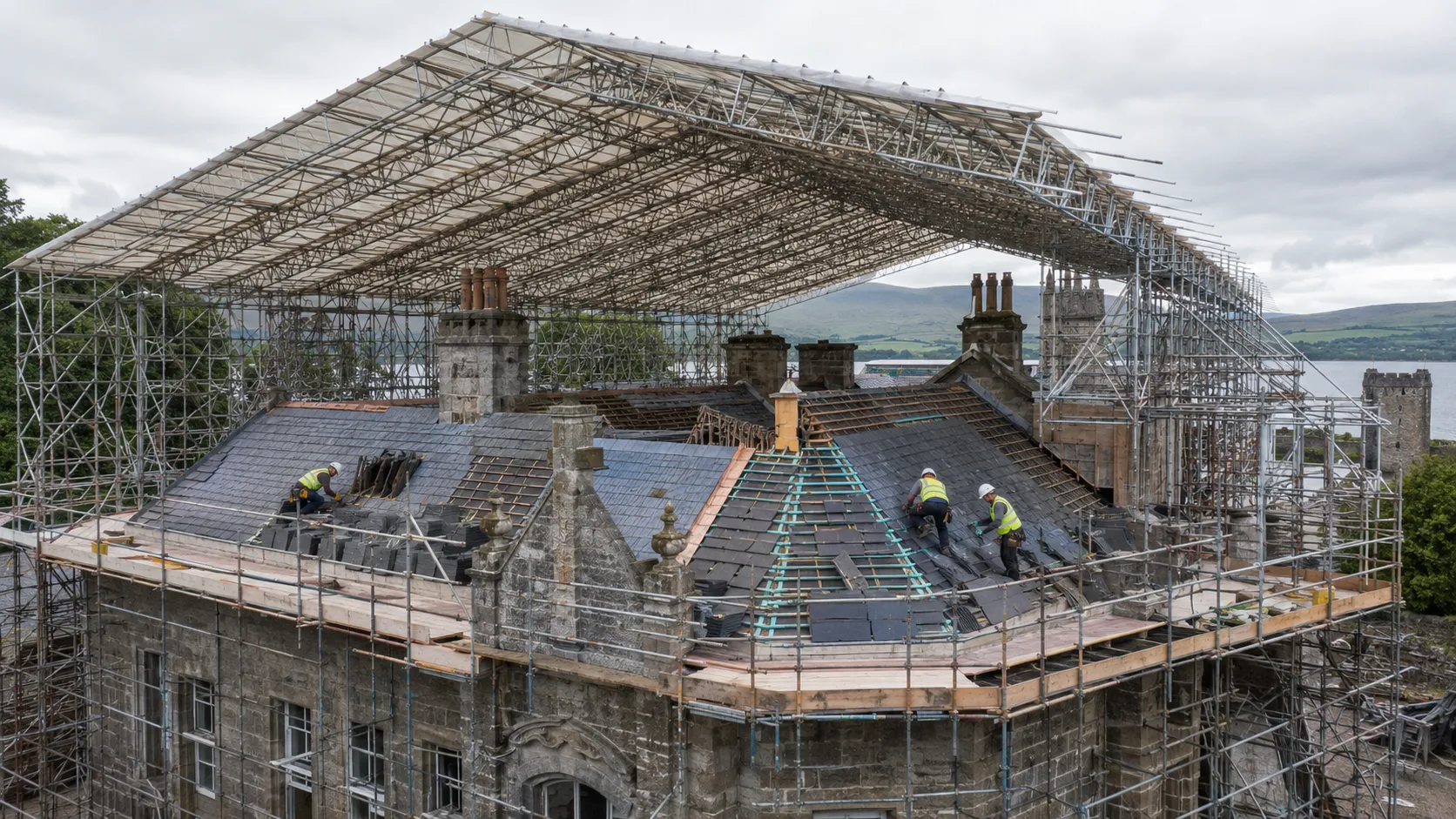
Listed and protected structures - properties on the Record of Protected Structures - require particular care during roof works. Heritage roofing materials (natural Welsh or Bangor Blue slate, clay plain tiles, Colly Weston stone slates, traditional lead) are often irreplaceable. A temporary roof allows heritage materials to be carefully removed, stored, sorted, and relaid at the appropriate pace, without pressure from weather exposure.
Planned Commercial or Industrial Shutdown Works
For industrial and commercial properties, planned roof maintenance or replacement during a shutdown window must be completed within the planned period. A temporary roof allows the phasing of roof works across a wider area than could be completed in a single good-weather window - and insulates the project programme from weather disruption that would cause cost overruns or restart of occupied operations in an incomplete state.
When a Temporary Roof is Not Required
- 1External facade works only - where the roof is not stripped or opened, there is no need for weather protection above standard access scaffolding
- 2Minor chimney repairs - flashing repair, repointing, pot replacement - where the roof covering itself is not removed; a weatherproof tarpaulin over the chimney opening is often sufficient
- 3Works of very short duration (1-2 days) in settled weather with weather forecast checked - acceptable risk management for minor roof patch works by experienced roofers
- 4Flat roof works - flat roof systems are typically replaced in sections and sealed as work progresses; a temporary roof is rarely needed for flat roof replacement
Frequently Asked Questions
When do you need a temporary roof scaffold?
A temporary roof scaffold is needed for full re-roofing projects, structural roof repairs, fire and flood restoration, heritage re-roofing, and any project where the roof covering must be removed for more than a few days in Irish weather conditions. In Ireland, rain is possible in any month, making a temporary roof strongly advisable for any project that strips the roof deck.
Do you need a temporary roof for a partial re-roof?
A temporary roof is strongly recommended for partial re-roofing in Ireland, particularly between October and March. If the works are carefully phased and weather is monitored, some contractors manage without one during summer months, but the risk of water damage from an unexpected wet period is significant.
Is a temporary roof needed for fire damage restoration?
Yes. For fire-damaged properties, a temporary roof is typically the first action on the restoration programme. It prevents secondary water damage and is usually approved by insurance loss adjusters as part of the claim.
Need temporary roof scaffolding for an Irish project?
Ainscaff Scaffolding provides temporary roof and weather protection scaffold solutions for construction, renovation, insurance restoration, commercial, and heritage projects.